

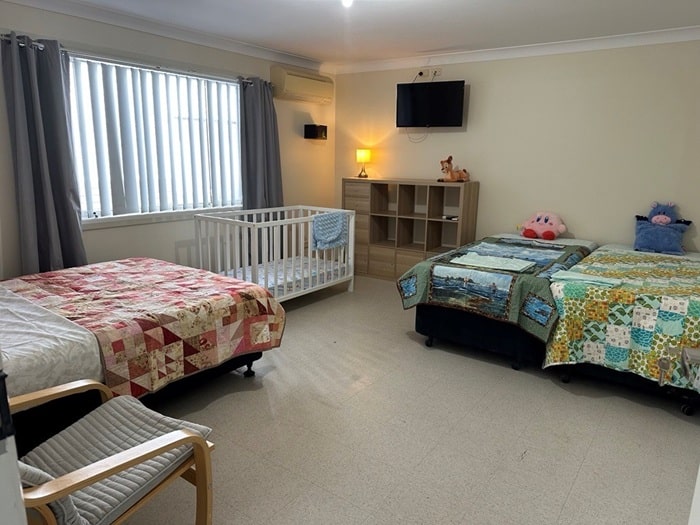
When Julia* arrived at the shelter, she washed her hair for the first time in a long time.
“I remember getting there and I was run down, I was tired, I was hungry,” Julia says. “I remember one of the workers made me and my kids lunch, I had a shower, and they had care packages for us. It was just nice.”
Finding safety after domestic violence
Every night, 54,000 women across Australia experience homelessness, with domestic and family violence (DFV) as the leading cause. Most of these women have children in their care.
Women’s Community Shelters (WCS) works hand-in-hand with local communities to create safe, welcoming places where women can turn when they have nowhere else to go. Starting again takes more than housing alone, which is why caseworkers make sure women have access to the right support – whether it’s counselling, health care, legal advice, education, or job opportunities – so they can take back control and plan a better future.
Julia’s story of survival, safety and support
Julia and her two daughters turned to WCS when they became homeless, after enduring years of physical, psychological, financial and emotional abuse.
“I was in quite a serious domestic violence relationship,” she says. “We just left our home, left our car, left everything behind.”
Julia admits she was reluctant to go to a shelter but now describes the staff as a “second family”. During her time in crisis accommodation, she received intensive support with immediate safety needs, then began her journey toward stability.
The support she received from her caseworker was beyond what she expected. “They helped me get healthy, they got me into counselling, they helped me get a home, they helped me with everything – they helped me rebuild my life again,” she says.
WCS helped Julia move from crisis accommodation to transitional housing. Throughout this period, staff helped Julia enrol her daughters in safe educational environments, and access health care and counselling to begin healing from the trauma of domestic violence. She was also assisted with legal challenges – such as navigating the Family Court process – and understanding the tactics of DV and coercive control.
Julia completed a TAFE certificate and now flourishes in her role.
Our partnership with Women’s Community Shelters
More than one in two women who seek a bed in a crisis shelter are turned away every night, mostly due to lack of space. There is a desperate need for more beds and more shelters.
In 2025 the Foundation made a significant three-year funding commitment to Women’s Community Shelters dedicated to creating more crisis accommodation, support programs, and housing pathways to independence for women and children experiencing DFV.
Through our partnership an estimated 1,110 women and children are supported across the wider WCS network every year, which includes shelter stays, transitional housing, social housing, outreach and referrals.
Carole’s story: “For the first time in my life, I felt safe”
“I was desperate to leave with my baby after years of abuse from family members. I didn’t know of any support services for homeless people but when someone mentioned WCS, I made the decision to leave.
I felt tense and scared and couldn’t trust anyone when I first arrived at the shelter, nothing good had ever happened to me, except for my baby Jane.
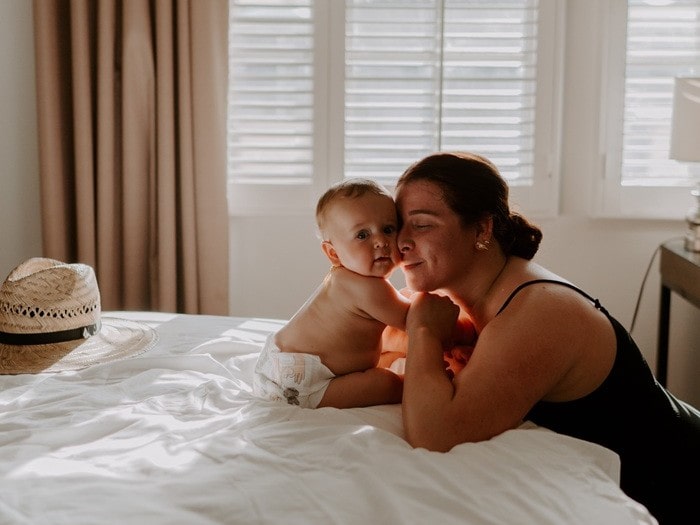
After a few days, I was amazed by the support from the staff. But I started feeling hopeless when it became difficult to secure a property. But the shelter helped me secure a lovely unit, and apply to the Escaping Domestic Violence Program so I could buy the basic items I needed, and one of the volunteers helped me assemble the furniture.
I was so grateful for the support.
My time at the shelter was the first time in my life that I felt safe and experienced a family atmosphere. I continue to run daily in the shelter area even though our unit is far from the shelter, as it’s my backbone of safety.”
Linda’s story: “I’m determined to rebuild our lives”
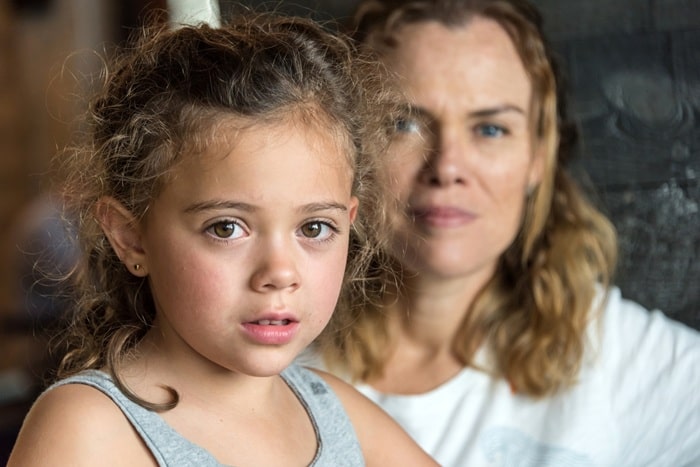
“When I was 36, I reached out to WCS after my partner’s physical abuse left me and my two children homeless.
I was overwhelmed and didn’t know where to turn, but the team at the shelter stepped in to support us. They helped me secure financial assistance and mental health support and even arranged daycare for my son, which was a huge relief.
One of the biggest challenges was helping my daughter overcome her fears related to school. With the team’s advocacy and regular counselling sessions, she gradually felt more confident, and I was able to support her successful return to school.
During this time, I was also job hunting, determined to rebuild our lives.
Thanks to their unwavering support, I eventually secured a private rental.
Today, I’m focused on creating a better future for myself and my children, and I’m incredibly grateful for the help I received at such a critical time.”
*Name changed for safety reasons.
Explore by Topic
asylum seekers & refugees (8) babies & children (12) Community Care (3) Community Grants (58) COVID-19 (11) disability (5) domestic violence (8) education (7) elderly (2) employment assistance (10) environment (3) events (10) First Nations (3) food relief (8) Gifts in Wills (1) grief (4) health care (9) homelessness (10) housing (19) human trafficking (10) legal support (1) media (4) mental health (16) mentoring (10) modern slavery (11) news (19) out-of-home care (30) prisoners (1) Providence House (4) rural & regional (12) scholarships (31) substance abuse (5) tax tips (1) unemployment (3) volunteering (9) young people (41)
How We Help
Each year we’re able to make a difference to thousands of people across the country with funds generously donated by compassionate Australians. We support initiatives that focus on benefiting the disadvantaged, marginalised and socially isolated people in our community.


